
Skyler with Zippy Klean did a very professional and fantastic job cleaning up my recently purchased 2023 Jeep Compass. Being a part time resident having the mobile service was critical for me!! I highly recommend Zippy Klean and Skyler for your automotive detail needs!! 👍🏻👍🏻
Home › Trim Restoration
Grey trim is what makes a car look old
You can have perfect paint and the vehicle still reads as tired, because the eye goes straight to chalky fender flares and faded seals. The grey is not dirt — it is a layer of sun-degraded plastic, and wiping it does nothing.
From $78
Included with any coating
Fully insured
Mobile — own water & power
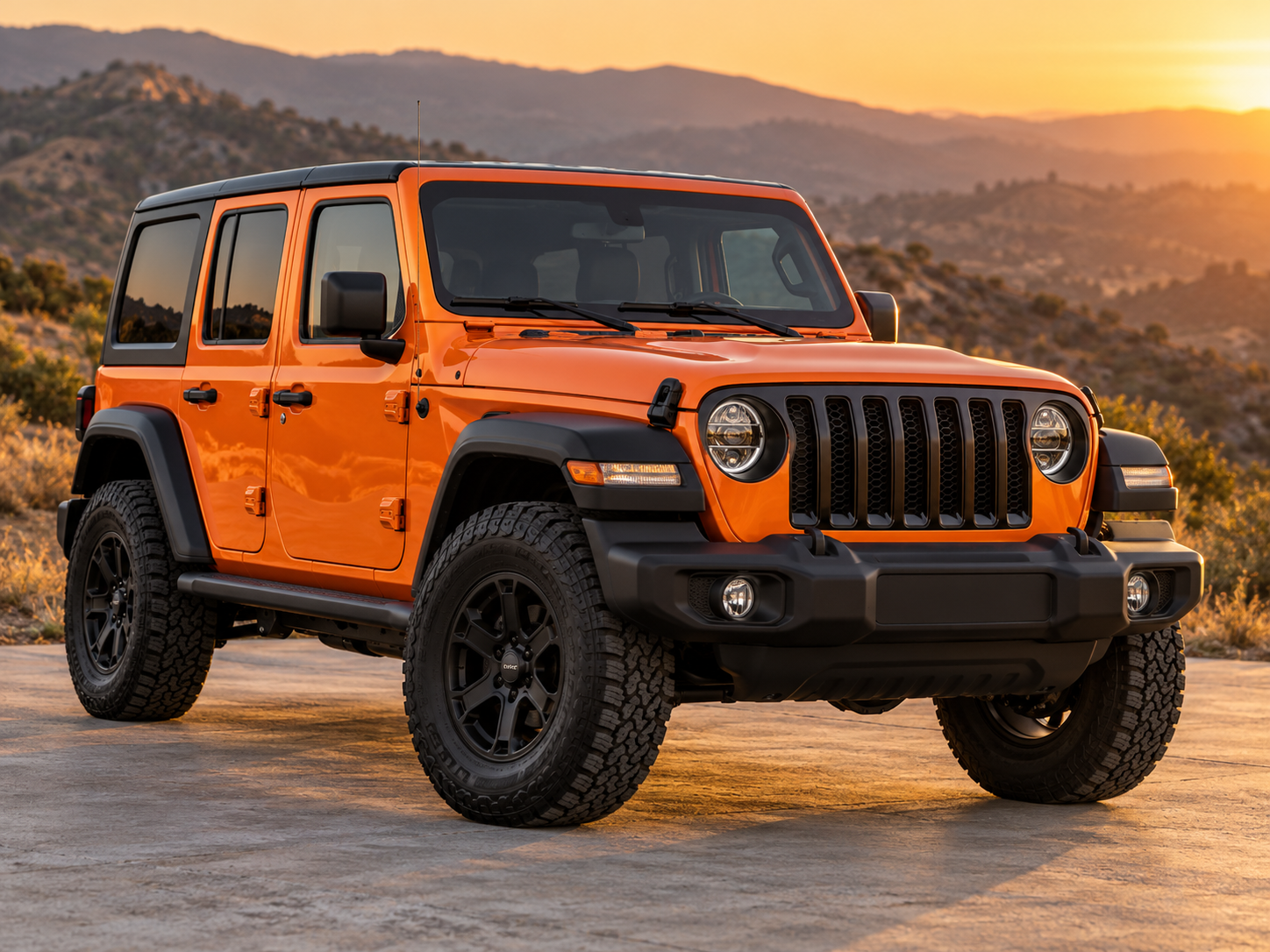
Visual proof
Before and after
Trim is the easiest before-and-after in detailing to judge, because there is no lighting trick involved. It is either black or it is grey.
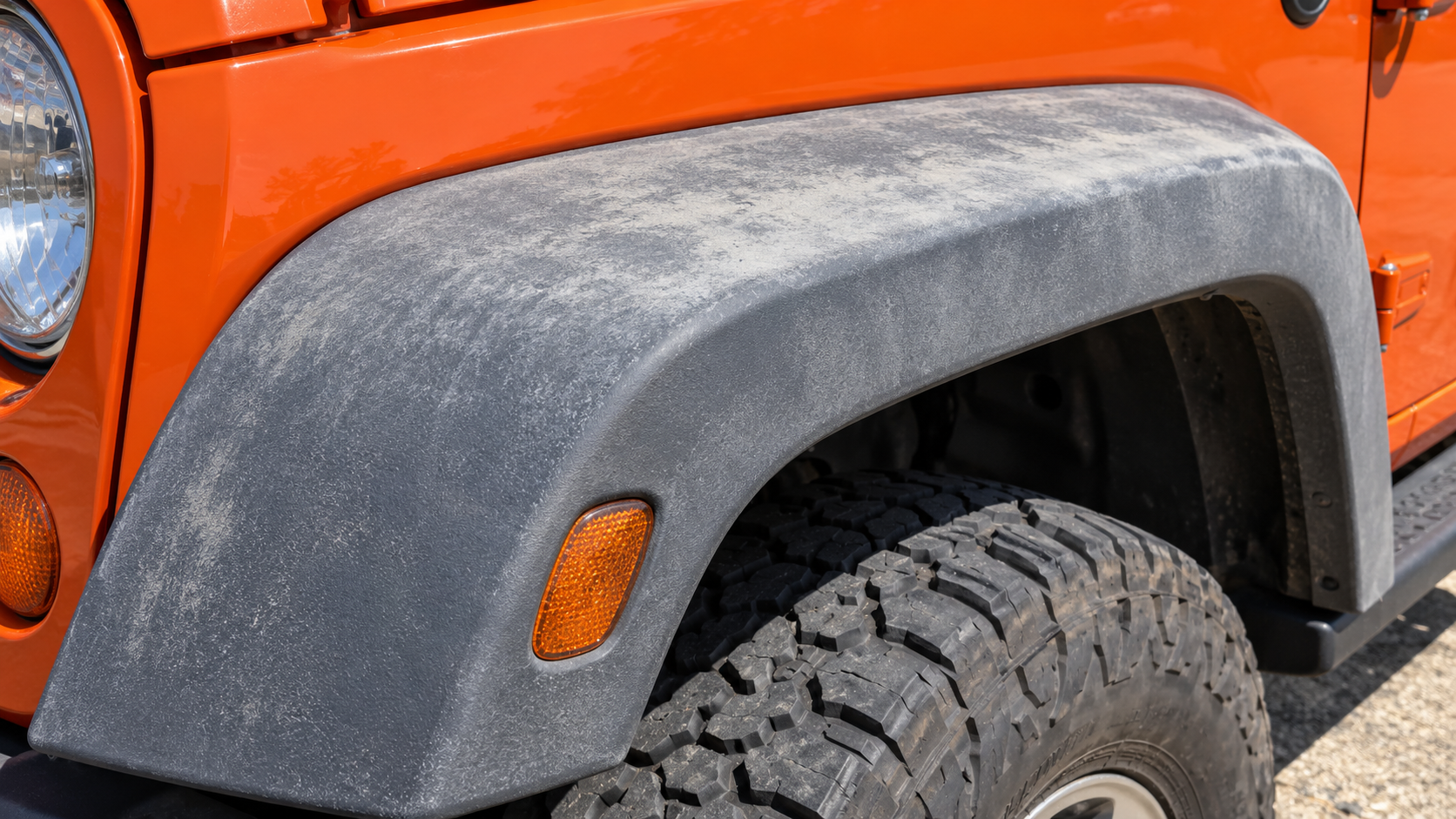
Before — chalky, patchy, sun-degraded
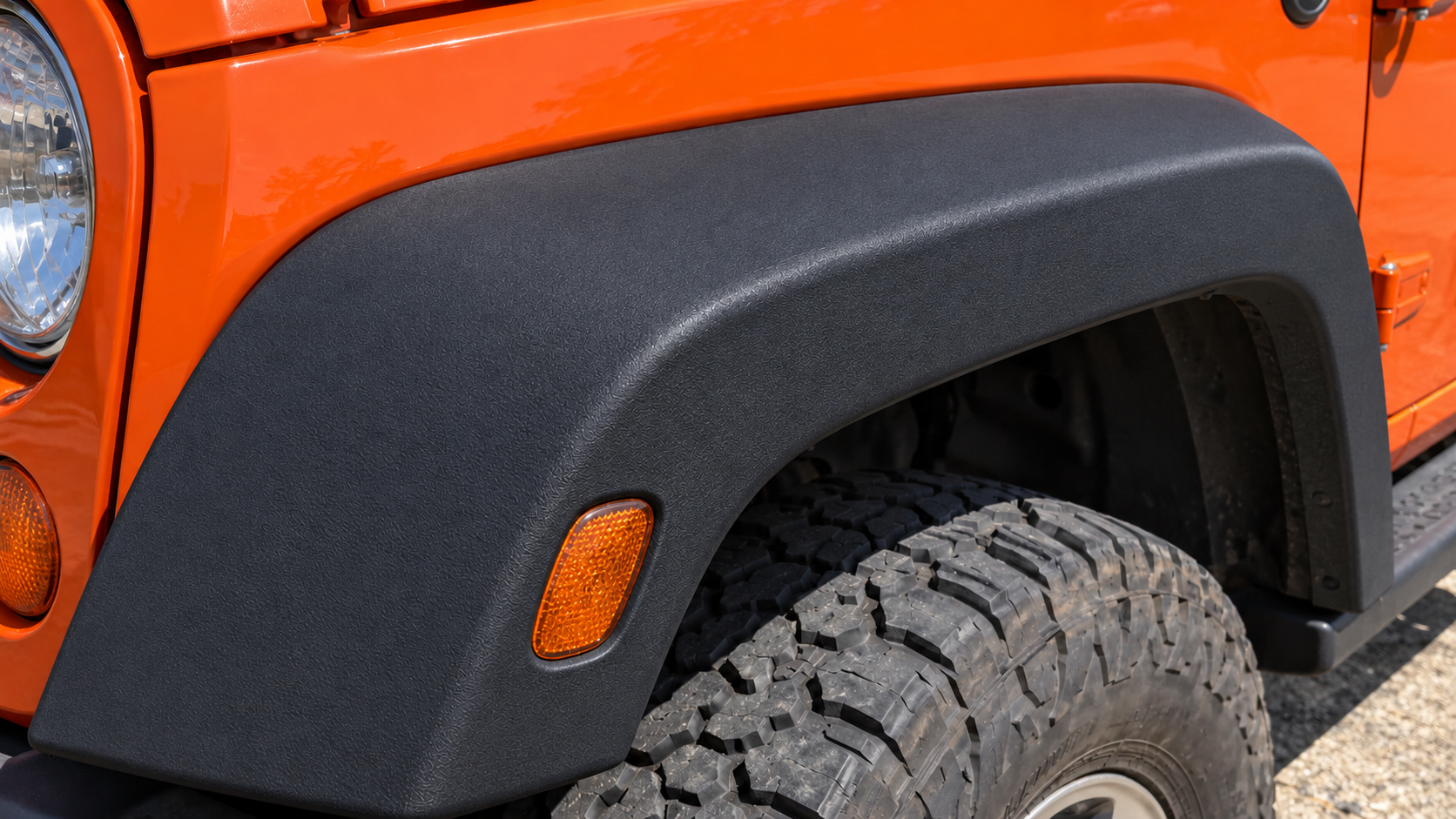
After — cleaned back, then coated
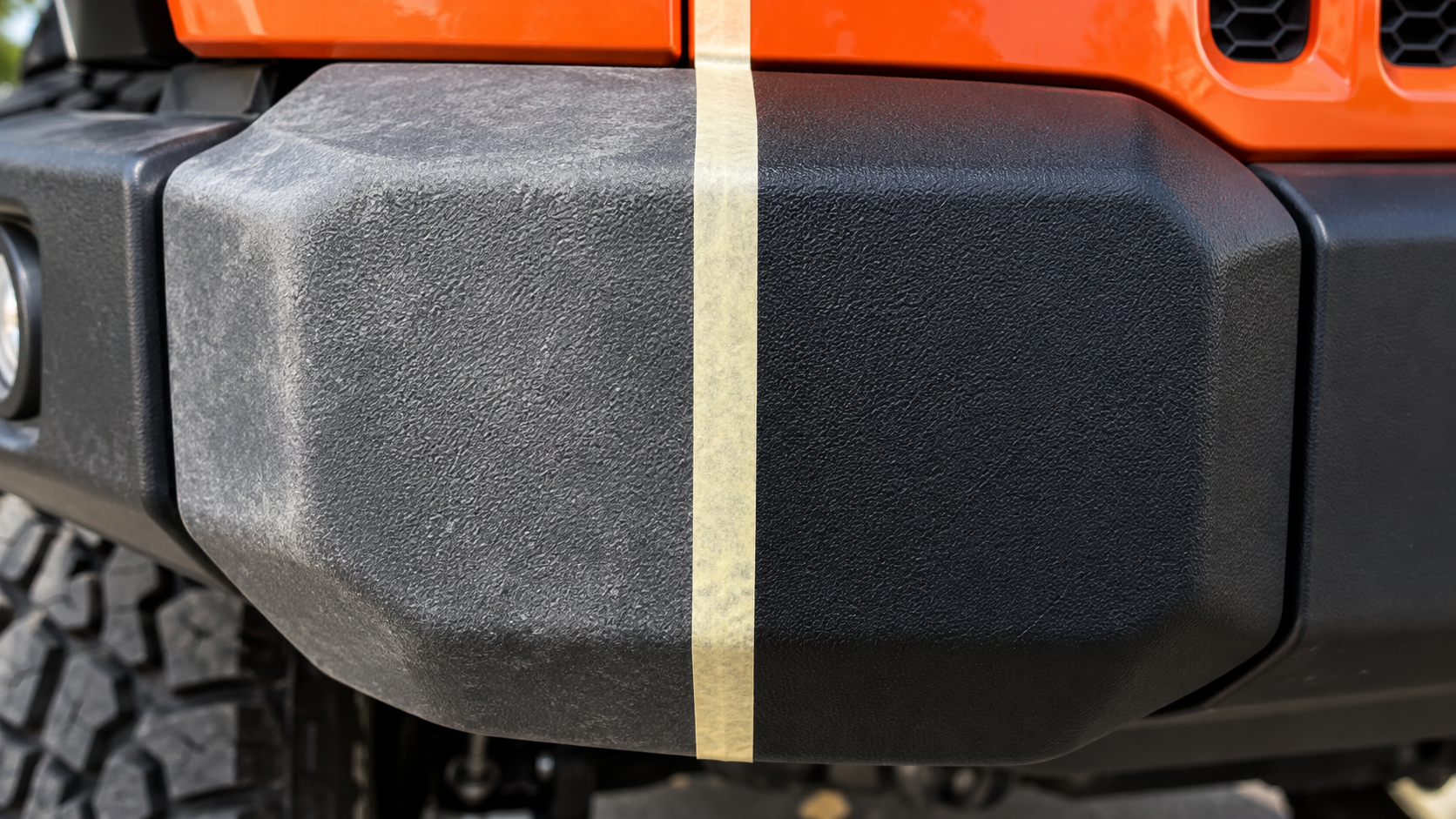
One piece of trim, taped down the middle
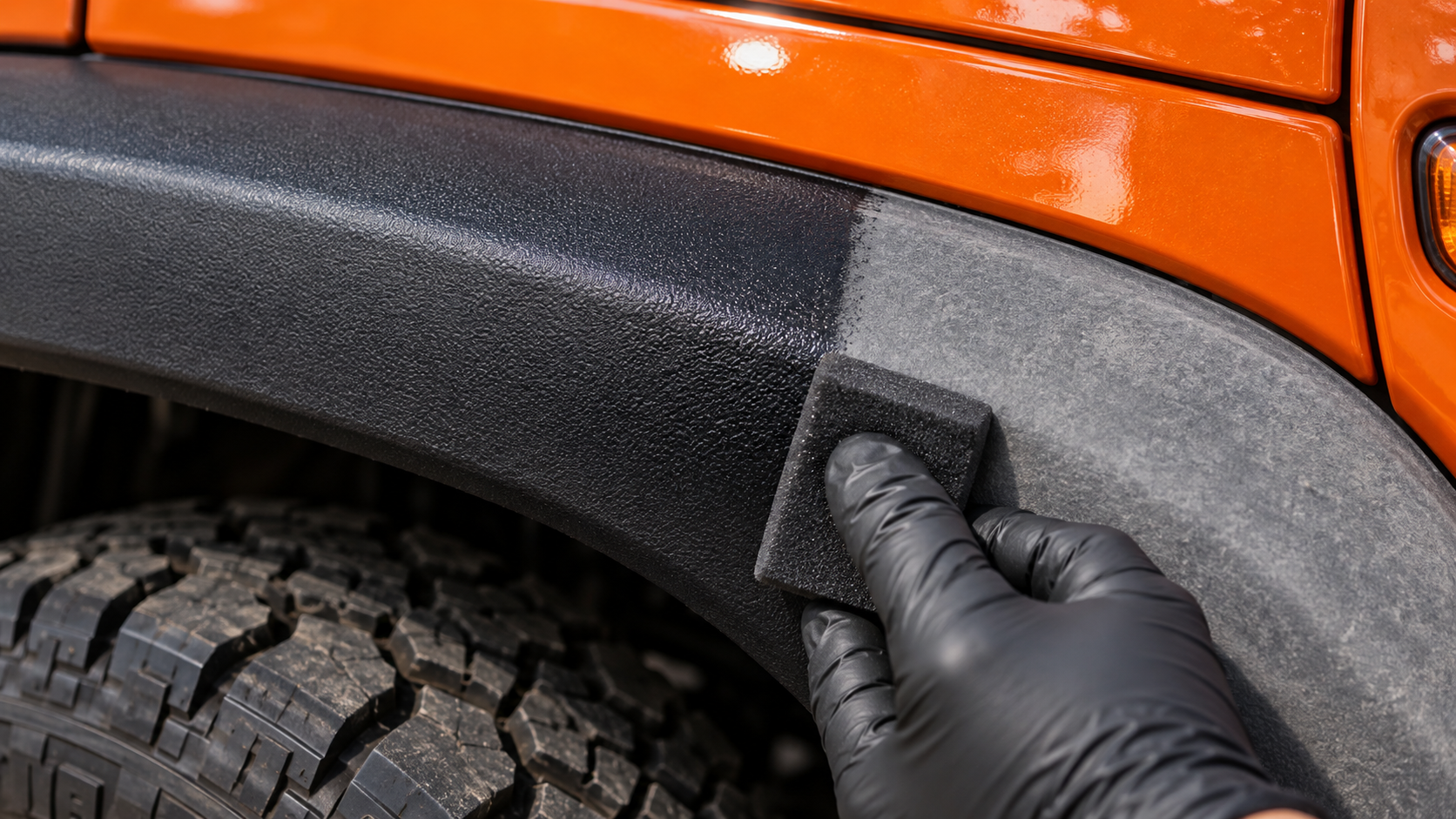
Cleaned back first, then bonded — not dressed
260+ days of sun a year
Why it is not dirt
Exterior trim is plastic with carbon black pigment and UV stabilisers blended through it. Sunlight breaks the surface down and those additives are lost, leaving a thin chalky layer of spent plastic. That layer is the grey.
Fender flares & cladding
Worst affected
Large textured areas facing straight up at the sun. Always the first to go.
Bumper caps & grille
Front-line
Sun plus road grit plus bug spatter. Fades unevenly, which looks worse than evenly.
Mirror caps & surrounds
Eye level
Small pieces, but right where everyone looks when they walk up to the vehicle.
Rubber seals & wipers
More than looks
Dried seals shrink and crack, which is where wind noise and water leaks start.
- The oxidised layer comes off first — coating over chalk just seals the chalk in
- Then it is bonded, not dressed — NanoPro® Nano Flex Plastic and Rubber bonds to the plastic instead of sitting on it
- No greasy wet look — a clean factory satin finish, which is what trim is supposed to look like
- It will not sling onto your paint in the first rain, the way silicone dressings do
- Cladding-heavy vehicles are quoted by inspection — a Jeep or 4Runner carries several times the trim of a sedan
- Included as one of the four coated surfaces in every Borograph and Liquid PPF package
Starting prices — mobile included
What trim restoration costs
Prices shown are card prices. Pay by cash or check and the lower price applies — shown in green beside every price on this page. No fee is ever added at checkout; the price you see is the price you pay.
The price follows how much trim the vehicle carries, not how big it is. A large sedan with window surrounds and mirror caps is a smaller job than a mid-size SUV wrapped in flares, rockers and bumper caps.
Trim restoration
Trim restoreClean back the oxidised layer, then coat with NanoPro® Nano Flex Plastic and Rubber
from $78$75 cash
Heavy cladding packagesJeeps, 4Runners, Broncos and off-road trim — several times the trim area
By inspection
Rubber seals, wiper arms & cowlDone alongside the plastic in the same visit
Included
Send a photo of the worst piece on the vehicle, taken in daylight and with the trim dry. Wet trim photographs far better than it looks, so a wet photo costs us both a second conversation.
Trim that is past restoring
Degraded all the way throughChalky when wet, surface texture breaking down
Not restorable
Cracked or shrunken sealsConditioning helps, but will not reverse cracking
Replacement
Wet the trim with water. Roughly whatever colour it goes wet is the colour restoration will hold it at. We will tell you which pieces will come back and which will not before you book, rather than after.
Trim coating is included with a coating package
Stealth Diamond Borograph CeramicTrim is one of four coated surfaces — body, glass, trim and wheels
from $1,035$1,000 cash
Liquid PPF + Stealth DiamondTrim coated as part of the package — permanent, 15+ years
from $3,105$3,000 cash
Maintenance programMonthly deluxe detail for coated vehicles, 25% off — trim checked and topped up
from $195 / mo$188 / mo cash
If your trim is faded and you are already considering a coating, tell us when you book. The restoration happens as part of the prep and the trim coating is already in the package price.
13 years in business
5,000+ vehicles
Fully insured
Trained & certified techs
All cards, cash, check, Venmo & PayPal
100% satisfaction guaranteed
In our customers’ words
Five stars, every one
Google Reviews
Shown word for word
These reviews are from Zippy Klean’s Hawaii customers — same owner, same crew standard, now in San Diego.
ZIPPY KLEAN Technician Steve was absolutely a Professional. He answered all of our questions before we knew to ask it. We got the Worx package for OUR 2025 Ford Bronco and are extremely satisfied. Stay tuned for the 6 weeks report, the time it takes for the clear coat to cure. We would HIGHLY RECOMMEND ZIPPY KLEAN TO HELP MAINTAIN YOUR CAR IN PRISTINE CONDITION. MAHALO STEVE FOR YOUR PROFFESIONAL AND ALOHA ATTITUDE.
We are so pleased with the job That Skylar at Zippy Klean did on our car. It was covered in tons of dog hair inside, we thought it would never come clean. He came to our house and worked for hours vacuuming and cleaning the interior and the exterior. It was sparkling inside and out.
No obligation
Get your trim quote
Send a daylight photo of the worst piece on the vehicle, with the trim dry. We will tell you what will come back to black, what will not, and what the whole vehicle costs.
Prefer to talk? (858) 808-1244 — call or text, Mon–Sat.
Straight answers
Trim questions
Why does black plastic trim turn grey?
Unpainted plastic trim turns grey because UV light breaks down the plastic at the surface and the carbon black pigment and UV stabilisers blended into it are gradually lost — what you are looking at is a thin layer of degraded, chalky plastic sitting on top of the good material underneath.
That is why wiping it does nothing. The grey is not dirt on the trim, it is the trim. Run a finger across badly faded cladding and it leaves a dull chalky mark on your skin — that is oxidised plastic coming off.
Southern California is about the worst case for it. Textured plastic has far more surface area than smooth paint, and more than 260 days of direct sun a year works on every bit of it. Horizontal and south-facing pieces always go first.
What is the difference between a trim dressing and trim restoration?
A dressing is a product that sits on top of the plastic and darkens it temporarily, and it washes off. Restoration means cleaning the oxidised layer off the plastic first and then bonding a coating to the fresh surface, so the colour is held in place rather than painted on.
Most quick-detail trim shine is a silicone dressing. It looks excellent on collection day, it streaks down the paint in the first rain, and it is gone inside a few washes — which is exactly why the trim always looks faded again a month later.
We clean the degraded layer back, then coat the plastic with NanoPro® Nano Flex Plastic and Rubber, which bonds to the surface instead of resting on it. It is the same product used on trim in our coating packages.
Can faded trim always be brought back to black?
No. Trim that is lightly to moderately oxidised comes back to a deep factory black, but plastic that has degraded all the way through — chalky, rough, with the texture breaking down — cannot be restored and needs replacing.
The rough test: wet the trim with water. Whatever colour it goes wet is roughly the colour restoration will hold it at. If it comes up deep black when wet, it will restore well. If it still looks grey and patchy wet, the plastic itself is spent.
We will tell you which pieces will come back and which will not before you book. On older vehicles it is common for most of the trim to restore beautifully and one or two badly exposed pieces to be beyond it.
How much does trim restoration cost in San Diego?
Trim restoration starts at $78. Vehicles with heavy body cladding — Jeeps, 4Runners, Broncos, most off-road trim packages — are quoted after inspection, because there is several times more trim on them than on a sedan.
The price follows the amount of trim, not the size of the vehicle. A large sedan with a few window surrounds and mirror caps is a smaller job than a mid-size SUV wrapped in fender flares, rocker cladding, bumper caps and roof rails.
Trim coating is already included in every Stealth Diamond Borograph and Liquid PPF package, where trim is one of the four coated surfaces alongside body, glass and wheels. If your trim is faded and you are considering a coating anyway, say so when you book and we will restore it as part of the prep.
How long does restored trim stay black?
A bonded coating lasts dramatically longer than a dressing — a dressing is measured in washes, a coating in seasons — but we do not publish a year figure, because NanoPro does not state one for this product and we are not going to invent it.
What we can tell you is what drives it: how much direct sun the vehicle lives in, whether it is parked outside or garaged, and how it is washed. A car that sits in full San Diego sun all day will need refreshing sooner than one under a carport.
Customers on our maintenance program get the trim checked and topped up as part of the monthly visit, which is the simplest way to keep it from creeping back.
Do you restore rubber seals and wiper arms too?
Yes. The same process covers door and window rubber seals, wiper arms and cowl panels, which fade for exactly the same reason as plastic cladding and are usually the pieces that give a clean car away.
Rubber seals are worth doing for more than looks. Dried out, chalky seals shrink and crack, and that is what starts wind noise and water leaks around doors and the sunroof. Keeping them conditioned is cheap compared with replacing them.
Window surrounds, grille surrounds, mirror caps, roof rails, bumper caps and rocker cladding all get done in the same visit. It is usually the combination that makes the difference — restoring the flares and leaving grey seals still reads as tired.
Mobile — we come to you
Book your spot
(858) 808-1244San Diego County to Temecula. Mon–Sat by appointment.