
Zippy Klean was recommended by the dealer in Honolulu for my new 2025 Porsche. I was VERY impressed by the rep who detailed the car at my house. He was extremely knowledgeable and you can't beat the convenience! They're my "go-to guys" now!
Home › Heavy Gelcoat Oxidation Compounding
If the chalk comes off on your hand
That white powder is pigment. The sun has broken down the resin holding it, and washing will never stop it. Multi-stage compounding cuts the dead layer off and brings the colour back — then it has to be sealed, or you will be doing it again in two seasons.
$67.30 / ft
Severity assessed first
Fully insured
Mobile — own water & power
Visual proof
Before and after
Heavy oxidation does not look dirty. It looks faded, flat and tired — like the colour has gone out of the unit rather than something has gone onto it.
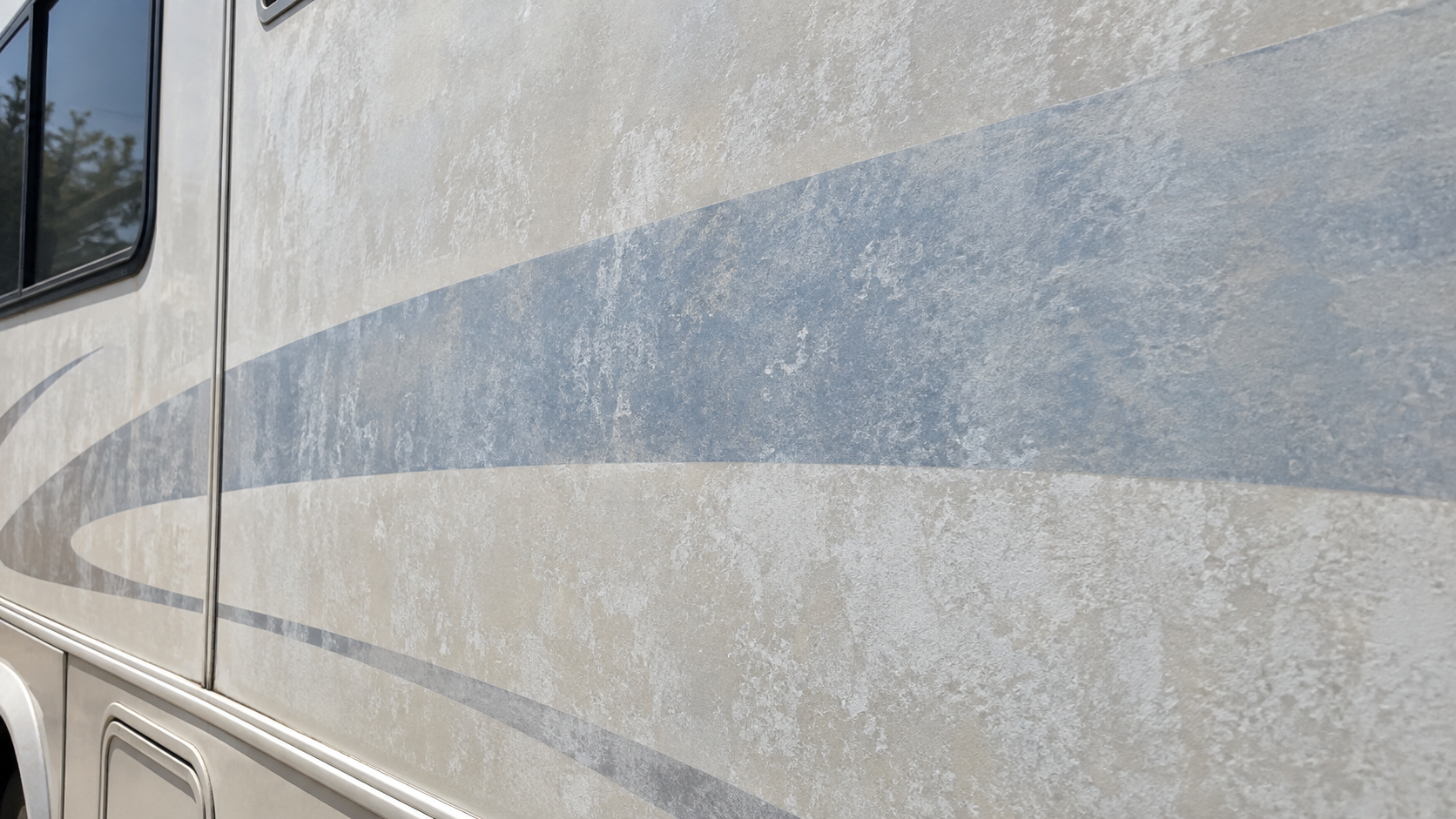
Before — chalked flat, colour faded out
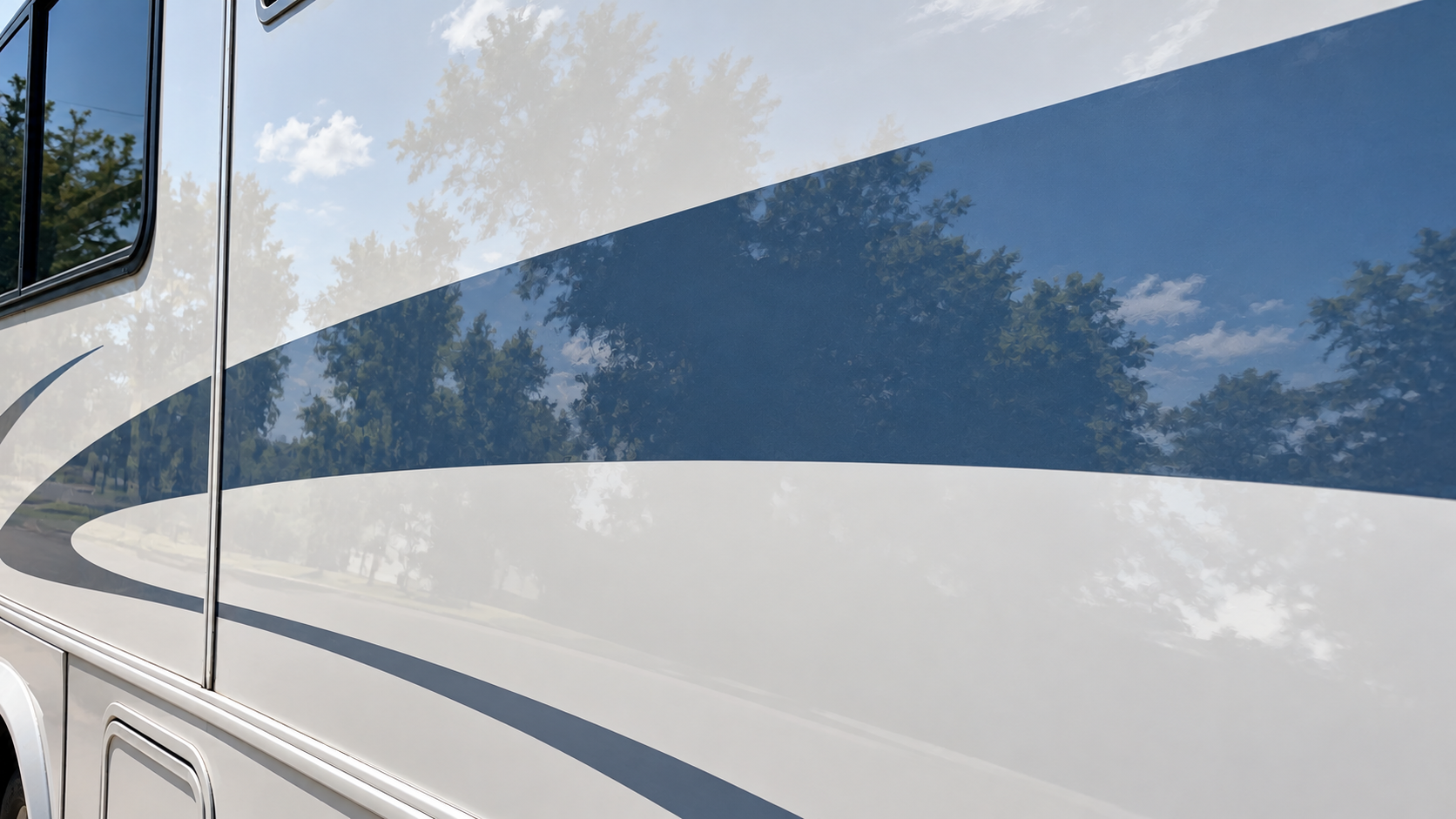
After — multi-stage compound, polish, seal
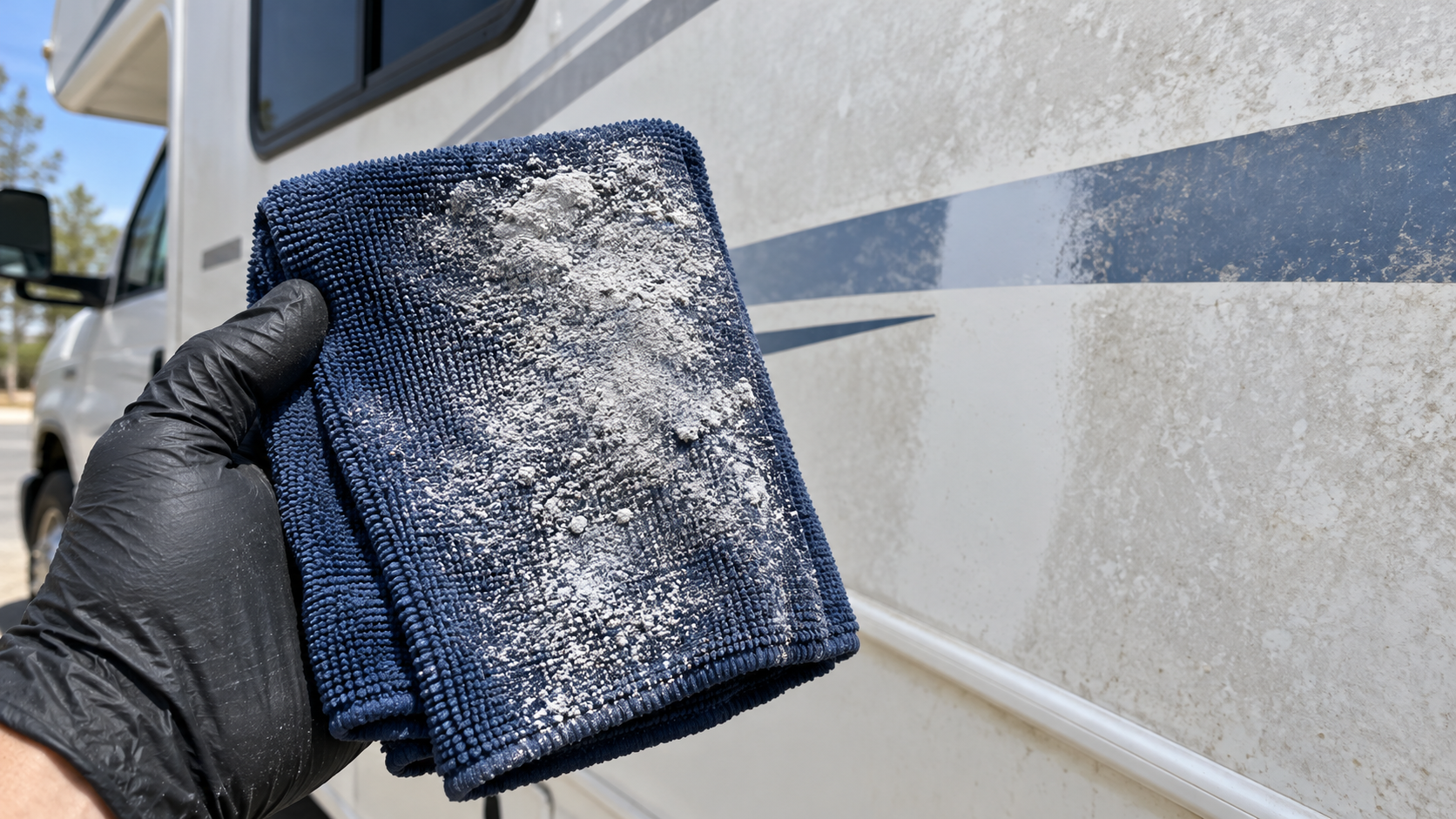
White powder on a dark cloth — that is your gelcoat
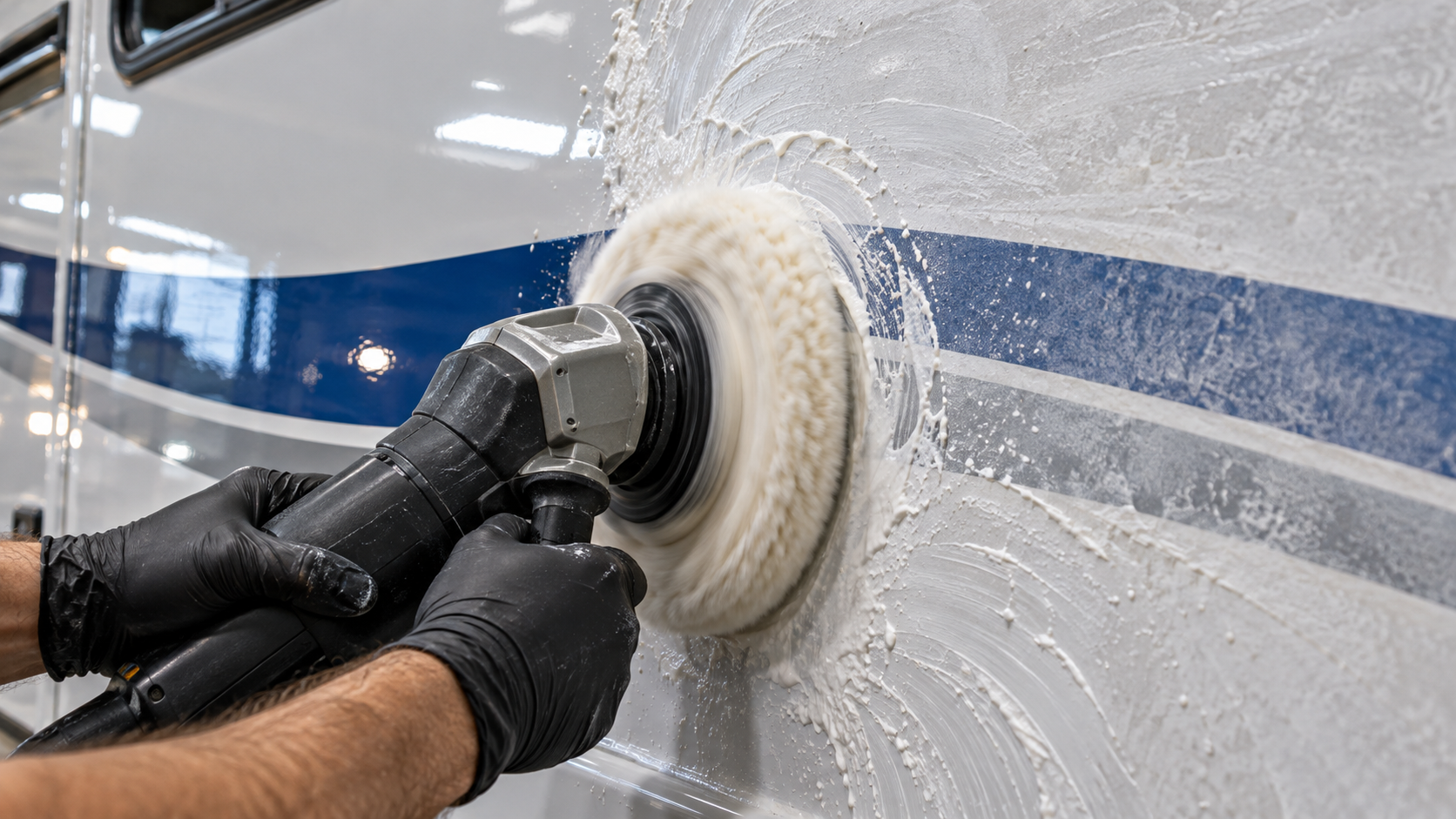
Wool pad and cutting compound — then progressively finer
Wet it and look
Which one you need
There are two gelcoat jobs and they are not interchangeable. The test takes thirty seconds and a hose, and it is the same test we do when we quote.
Comes up rich when wet
Single stage
Light oxidation. One corrective pass restores it. That page is here.
Still pale when wet
Heavy compounding
Deep oxidation. Multi-stage cutting, then progressively finer, then sealed.
Chalk on your hand
Confirms it
White powder transferring means the resin has already released the pigment.
Patchy and translucent
May be spent
If the laminate is showing through, it is a respray rather than a polish.
- Gelcoat is finite — roughly 15 to 25 thousandths of an inch from the factory, and every correction spends some of it permanently
- We take what the oxidation needs, not what gets to a result fastest
- Sealing is not an upsell here — bare corrected gelcoat starts oxidising again the day we finish
- Black streaks stop once the surface is sealed, because there is nothing porous left for runoff to stain
- Done on site with the aviation protective spray over the cure — the method we have run on private aircraft since 2019
- We will tell you if it is past correcting rather than taking the job
Per linear foot — mobile included
What correction costs
Prices shown are card prices. Pay by cash or check and the lower price applies — shown in green beside every price on this page. No fee is ever added at checkout; the price you see is the price you pay.
Priced by the foot, with the rate set by height and the severity assessed before we quote. This is the one job we will not price off a photo of the whole unit.
Gelcoat correction
Gel coat oxidation removal — heavy multi-stageOne rate regardless of height
$67.30 / ft$65 / ft cash
Single-stage gelcoat polishLight oxidation — comes up rich when wet
$25.90 / ft$25 / ft cash
Gelcoat through to the laminatePatchy, translucent, fiber pattern showing
Respray
Send a close-up of the worst sidewall in daylight and dry, plus the same panel wet. Those two photos together tell us how deep it goes and what is actually recoverable.
What that works out to
24 ft travel trailerFull gelcoat oxidation removal
$1,615$1,560 cash
32 ft fifth wheelFull gelcoat oxidation removal
$2,154$2,080 cash
36 ft Class CFull gelcoat oxidation removal
$2,423$2,340 cash
The range is real, not a hedge. The same length of unit can sit at either end depending on height and how far the oxidation has gone, which is exactly why we look first.
Seal it, or do this again
Stealth Diamond Borograph CeramicPermanent — the point at which the cycle stops
$103.50 / ft$100 / ft cash
Liquid PPF + Stealth DiamondPermanent with the Borograph layer
$207.00 / ft$200 / ft cash
Maintenance programMonthly deluxe detail for coated vehicles — 25% off
from $195 / mo$188 / mo cash
Correcting without sealing means doing it again in two or three seasons, and every repeat spends more of a layer that never refills. If the budget only stretches to one of the two, correct less of the unit and seal what you corrected.
13 years in business
5,000+ vehicles
Aircraft since 2019
Fully insured
All cards, cash, check, Venmo & PayPal
100% satisfaction guaranteed
In our customers’ words
Five stars, every one
Google Reviews
Shown word for word
These reviews are from Zippy Klean’s Hawaii customers — same owner, same crew standard, now in San Diego.
Another great detail from Zippy. Had both my vehicles done. Came a little early and Skyler took care of business. Highly recommend. Try the super infused. Good stuff.
Skyler with Zippy Klean did a very professional and fantastic job cleaning up my recently purchased 2023 Jeep Compass. Being a part time resident having the mobile service was critical for me!! I highly recommend Zippy Klean and Skyler for your automotive detail needs!! 👍🏻👍🏻
No obligation
Get your gelcoat assessed
Send two photos of the worst sidewall — one dry, one wet — and tell us the length and height. That is everything we need to tell you which job it is and what it will cost.
Prefer to talk? (858) 808-1244 — call or text, Mon–Sat.
Straight answers
Gelcoat questions
What is gelcoat oxidation?
Gelcoat oxidation is the breakdown of the outer resin layer of a fiberglass surface by UV light — the resin at the surface degrades and releases the pigment held in it, leaving a chalky, faded layer that rubs off as white powder.
Gelcoat is pigmented polyester resin, and it is the colour layer itself rather than a coating over the top of one. There is nothing protecting it, so sunlight works on it directly, and in Southern California it works on it more than 260 days a year.
The giveaway is that the chalk comes off on your hand. Run a finger down a faded sidewall: if it leaves a white powdery streak on your skin, that is pigment and degraded resin, and no amount of washing will stop it.
Do I need heavy compounding or a single-stage polish?
Wet the surface with water. If it comes up deep and rich when wet, a single-stage polish will bring it back. If it still looks pale and lifeless wet, the oxidation is deep and it needs multi-stage compounding.
That test costs nothing and it is the same test we do when we quote. Water temporarily fills the degraded surface and shows you roughly the colour that correction will restore — so it is also the honest preview of the result.
The difference in price between the two is significant, and the difference in time is a day or more. Guessing is not fair to you, which is why we assess rather than quoting a flat rate off a length.
Can gelcoat be compounded more than once?
Only a finite number of times. Compounding works by cutting degraded material off, and gelcoat is a layer of measurable thickness — roughly 15 to 25 thousandths of an inch from the factory — so every correction spends some of a budget that never refills.
This is the part of the trade nobody volunteers, and it matters more on fiberglass than on car paint because the surfaces are so much larger and the work is so much more aggressive. Heavy compounding uses a wool pad and a cutting compound, and it removes real material.
A coach that has been compounded aggressively every couple of years for a decade can reach the point where there is not enough gelcoat left to work with. Once you are through to the laminate underneath, the fix is a gelcoat respray or paint — a body shop job, not a detailing one.
We will tell you if your surface is near that line, and we take what the oxidation needs rather than what makes the quickest result.
Why do you insist on sealing it afterwards?
Because you have just spent material you cannot get back. Bare corrected gelcoat has no protection on it at all and begins oxidising again immediately, so sealing is what turns a one-time correction into a permanent one.
Correcting without sealing means doing the same job again in two or three seasons, and every repeat spends more of a finite layer. Compounding repeatedly without protecting is how a coach runs out of gelcoat.
A permanent Stealth Diamond Borograph coating over corrected gelcoat is the point at which the cycle stops. It is also why we would rather quote correction and coating together than sell you the correction alone.
Will the black streaks come back?
No, provided the surface is sealed. Black streaks are roof runoff staining oxidised gelcoat, and they stain because the chalky surface is porous and holds onto what runs down it — a corrected, sealed surface gives the runoff nothing to grip.
This is the thing owners notice first and value most. Streaks that used to need scrubbing every few months simply stop appearing, and the ones that do land rinse off.
If the streaks come back on a sealed surface, something above them has changed — usually failing sealant around a roof vent or the AC shroud. That is worth looking at rather than scrubbing at.
How much does gelcoat oxidation removal cost in San Diego?
Heavy gel coat oxidation removal is $67.30 per linear foot, one rate regardless of height, with severity assessed before we quote — lighter oxidation is handled by a single pass at $25.90 per foot instead.
So a 24 ft travel trailer is roughly $1,615, a 32 ft fifth wheel roughly $2,154, and a 36 ft Class C roughly $2,423 — against $622, $829 and $932 if a single pass is enough.
This is the one job where we will not price from a photo of the whole unit. Send a close-up of the worst sidewall taken in daylight, dry, plus a photo of the same panel wet — those two together tell us how deep the oxidation goes and what is actually recoverable.
Mobile — we come to you
Book your spot
(858) 808-1244San Diego County to Temecula. Mon–Sat by appointment.