
The guys at Zippy Klean did a great job buffing the scratched up dull paint job on my old Prius and making it shine like new. Appreciate, the really professional, friendly and speedy service, which included dropping me by a coffee shop while I waited. Couldn't be happier with Steven's team. Thanks!
Home › Paint Correction & Polishing
The step that makes paint look deep
Swirls, holograms and oxidation are not dirt — they are valleys cut into your clear coat, and no wash or wax removes them. Multi-stage machine correction levels the surface so the paint reflects cleanly instead of scattering light.
From $104
Included free with any coating
Fully insured
Mobile — own water & power
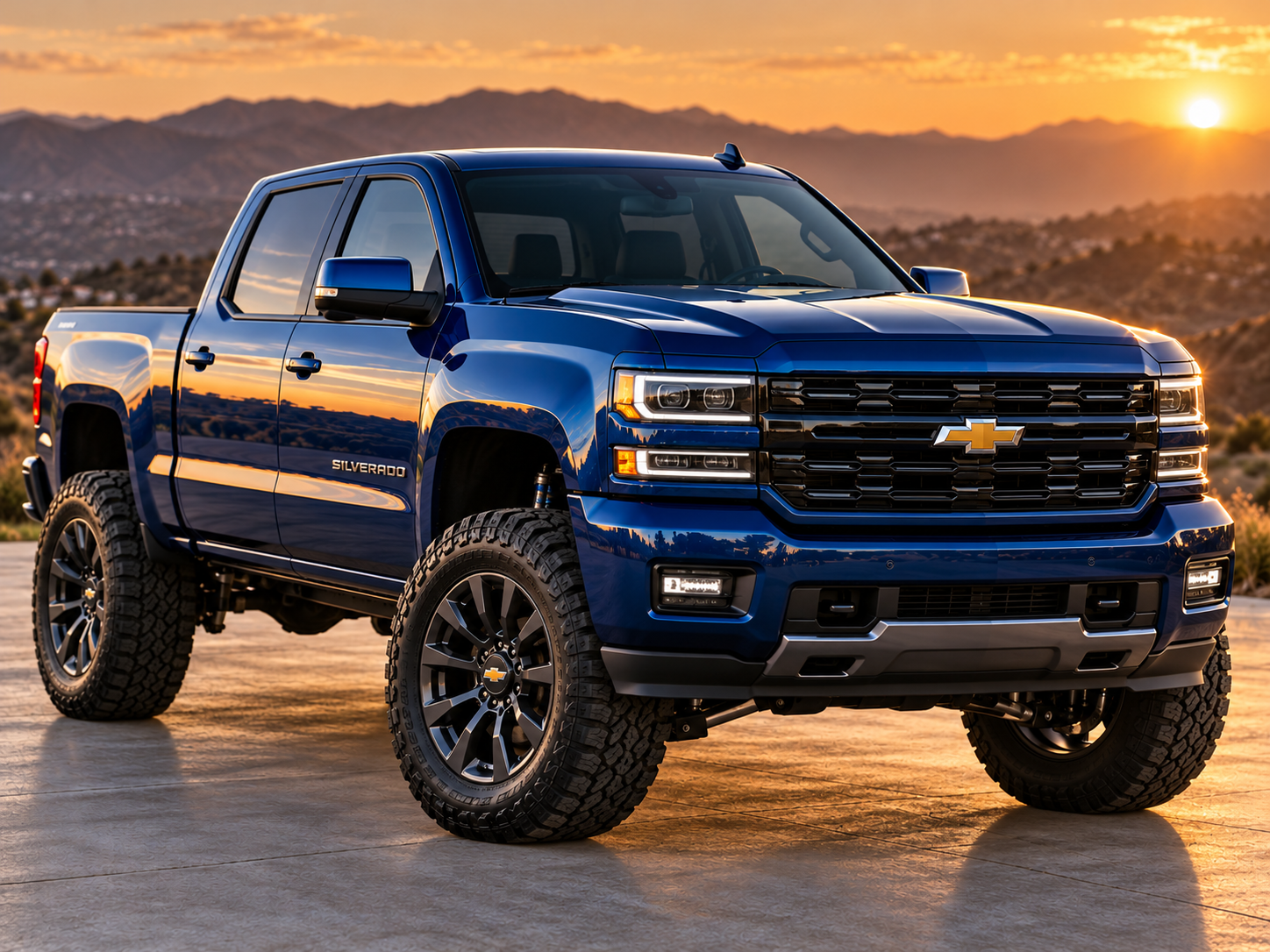
Visual proof
Before and after
Direct sunlight is the only honest light for paint. Shade hides swirls, which is why cars always look better in a showroom than they do in your driveway.
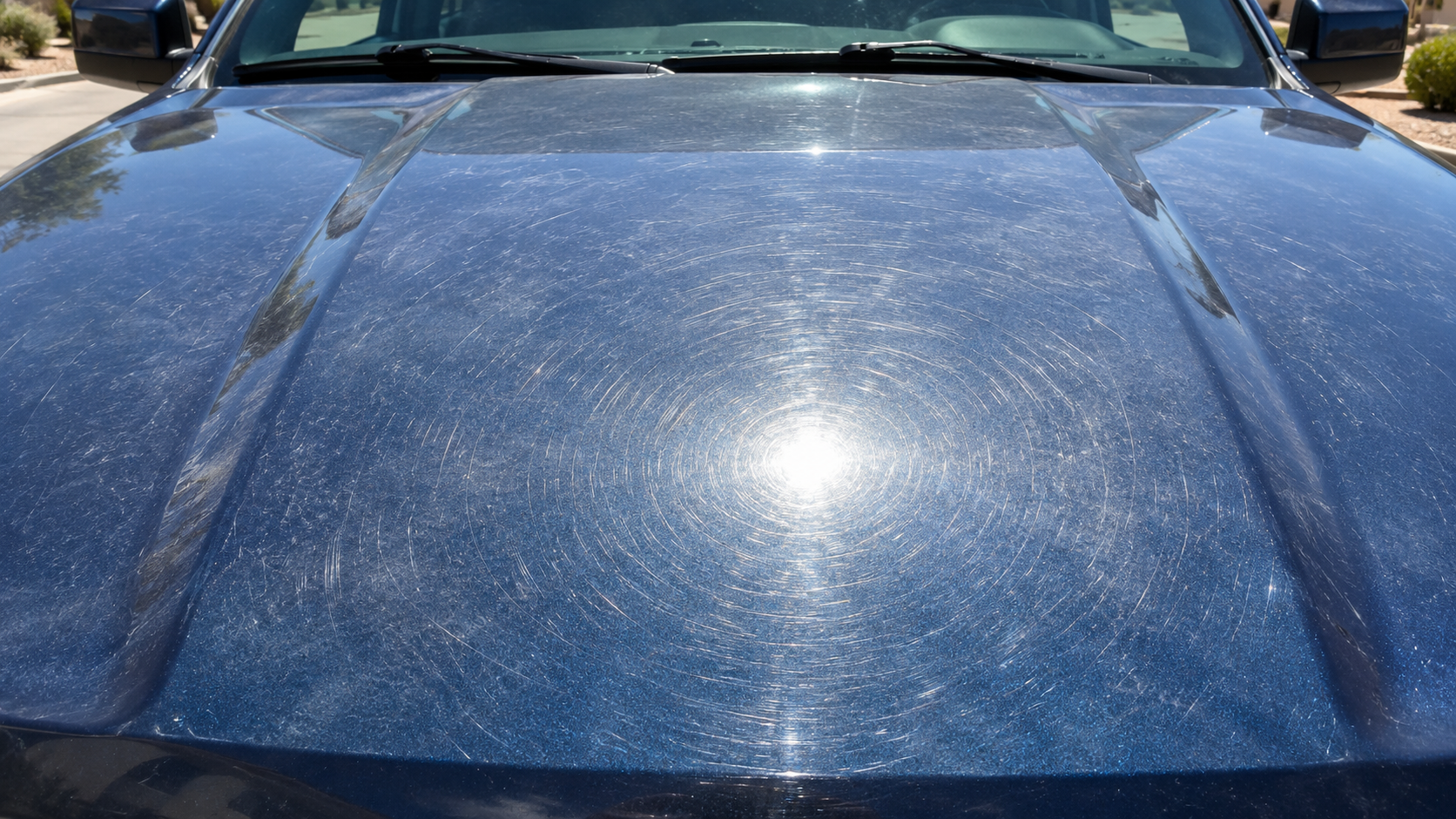
Before — swirls scattering the light
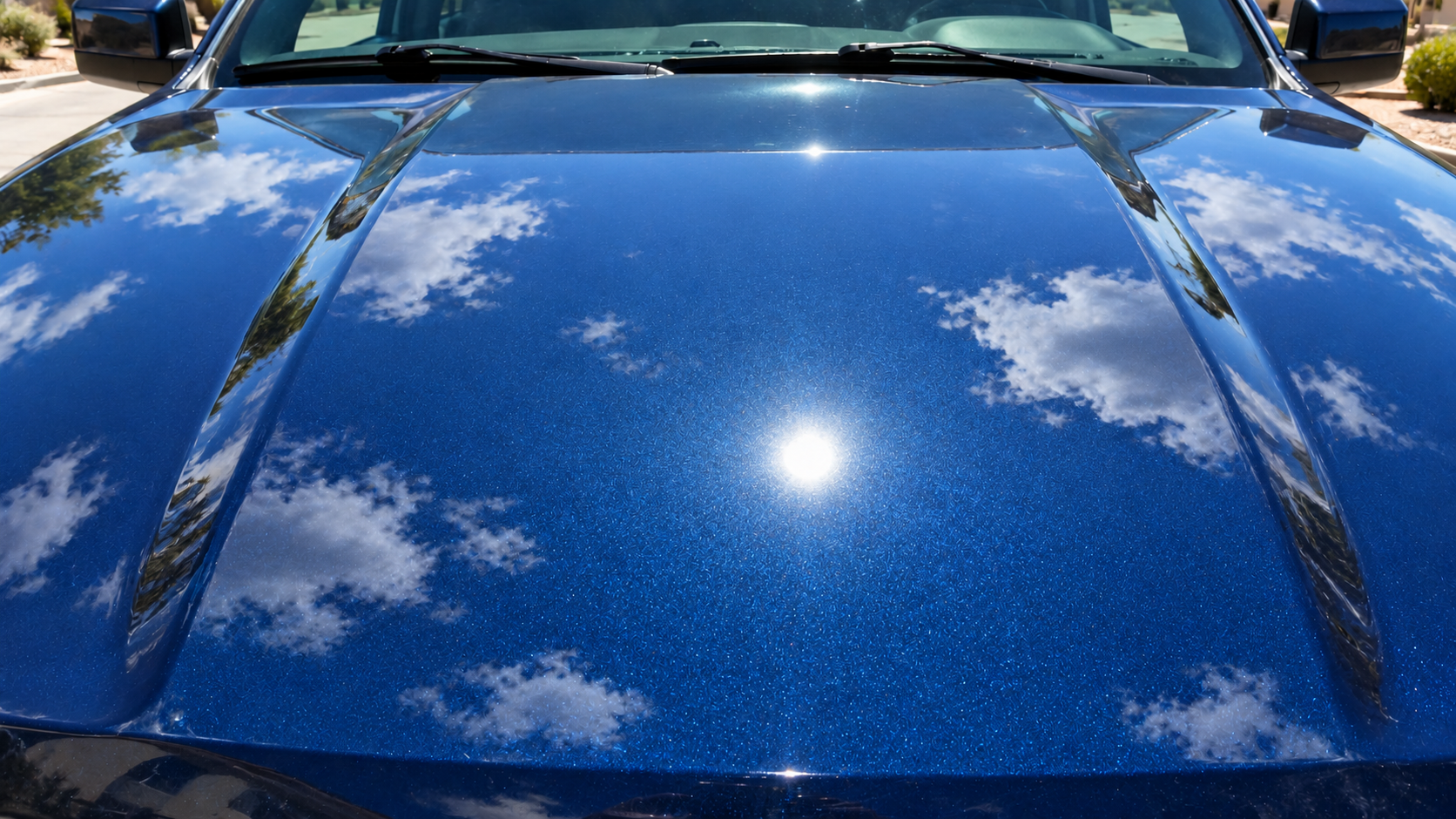
After — multi-stage correction
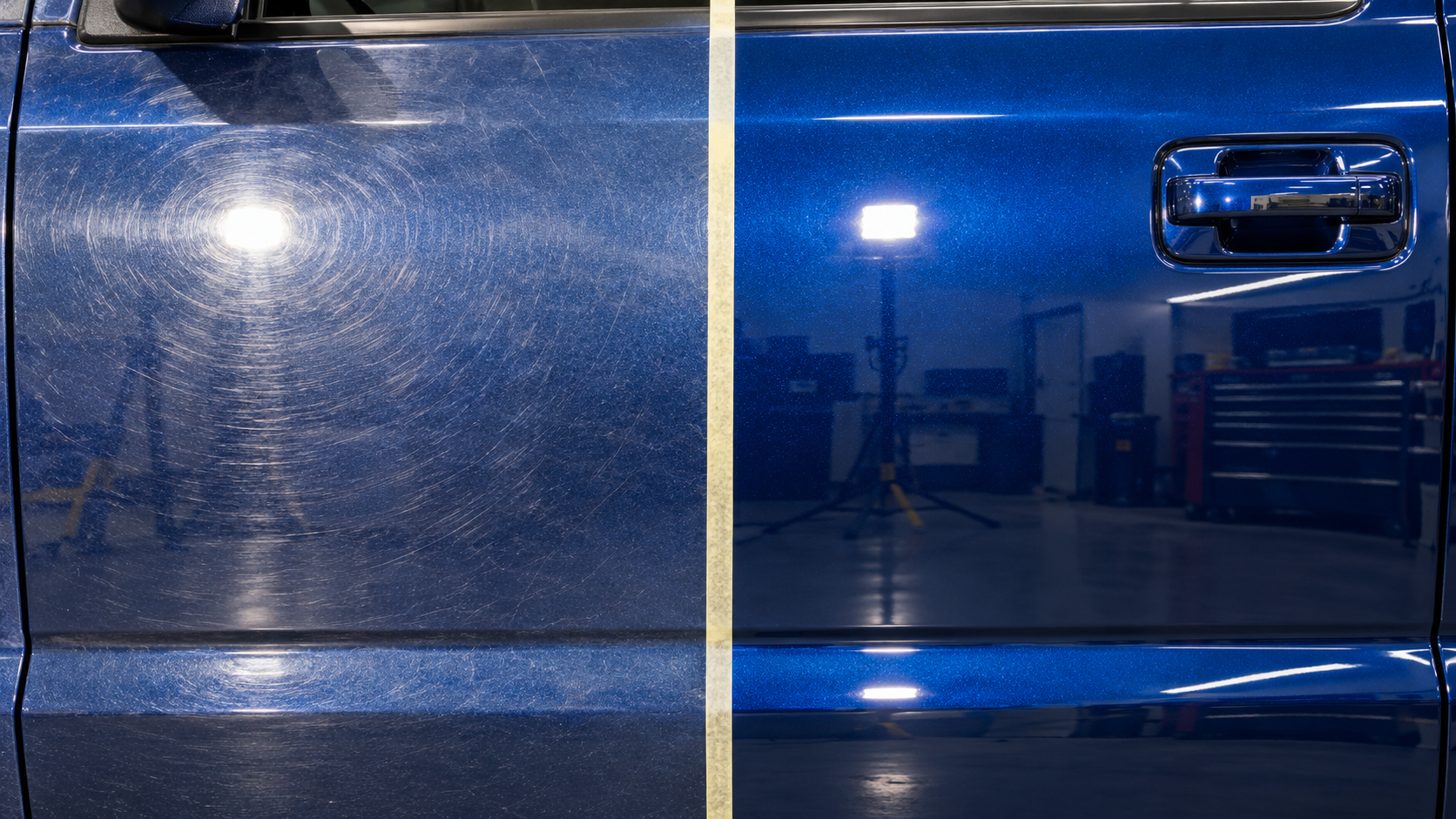
One panel, one pass, taped down the middle
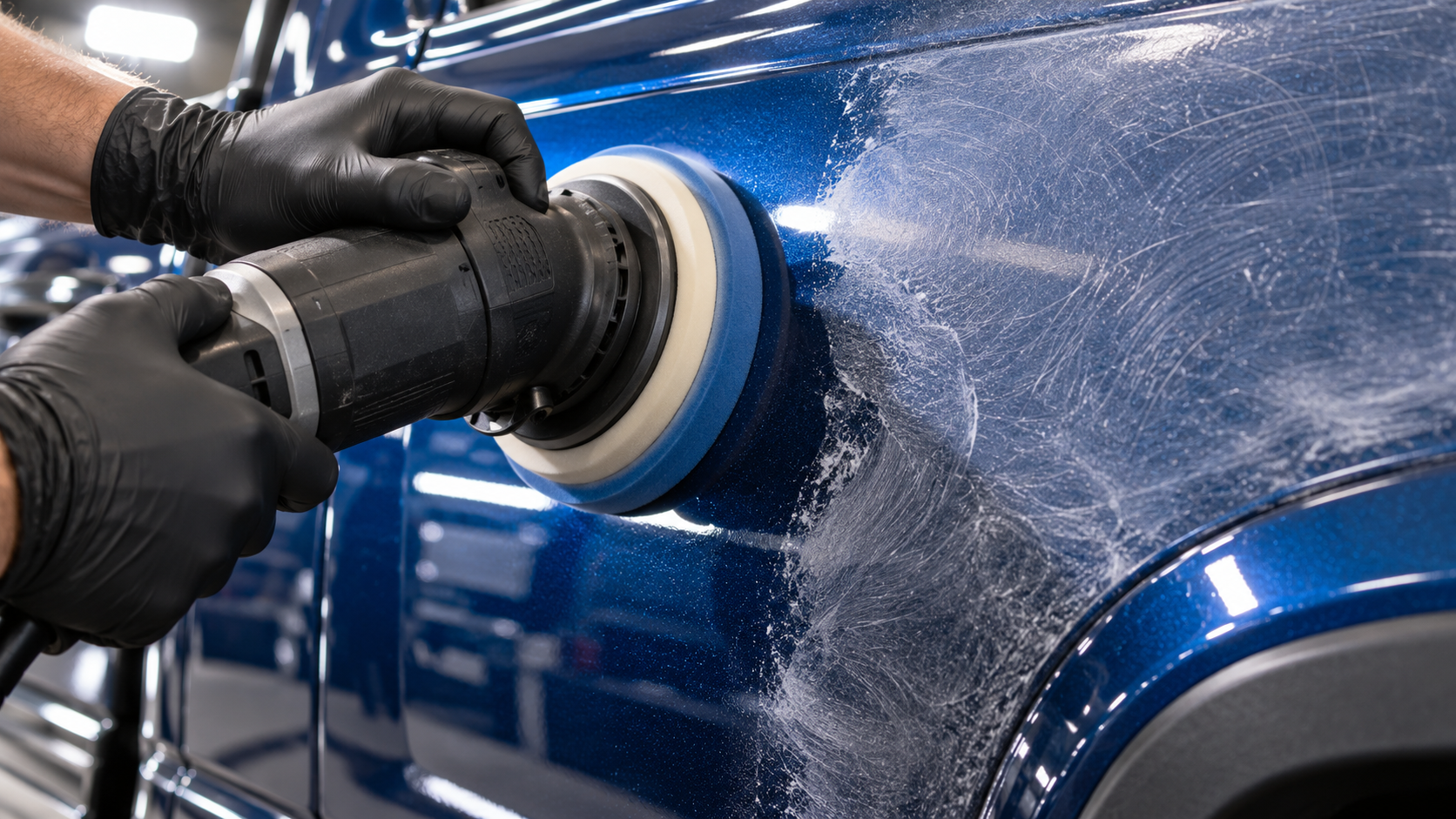
Cutting pass, then a refining pass
Within the clear coat
What correction fixes
Everything below sits inside the clear coat, which is why polishing removes it permanently. Anything that has cut through the clear needs paint, not polish.
Swirl marks
Wash-induced
Circular scratch webs from tunnel washes, dirty mitts and dry wiping.
Holograms
Previous shop
Buffer trails left by a rotary used badly. Common on dealer-prepped vehicles.
Oxidation
UV damage
The dull, chalky cast that 260+ days of sun puts on horizontal panels.
Water spot etching
16–18 grain water
Mineral rings etched into the clear. Light etching polishes out.
- Two stages for most vehicles — a cutting pass to remove defects, a refining pass to restore gloss
- Assessed in direct sunlight, the only light that shows swirls honestly
- Measured, not aggressive — correction removes clear coat, so we take what the defect needs and no more
- Trucks usually need more than cars — taller horizontal surfaces take more sun
- Included free with every Borograph and Liquid PPF package
- Mobile — done in an enclosed bay at your home or office
Starting prices — mobile included
What correction costs
Prices shown are card prices. Pay by cash or check and the lower price applies — shown in green beside every price on this page. No fee is ever added at checkout; the price you see is the price you pay.
Single-stage work is priced from a list. Multi-stage is not, because the number of stages depends on the paint rather than the vehicle.
Machine buff & polish — single stage
Vehicle
Small
Medium
Large
Machine buff & polish
$104$100 cash
$130$125 cash
$156$150 cash
Sizes. Small = sedan or coupe · Medium = crossover, pickup or small SUV · Large = full-size truck, van or large SUV.
Multi-stage correction
Two-stage correctionCutting pass plus refining pass — most daily drivers
By inspection
Three or more stagesHeavy defects, failed previous work, hard clear
By inspection
Severe water spot etchingQuoted separately when the mineral has etched deep
By inspection
Send photos taken in direct sunlight and we will tell you how many stages it needs and what will not come out. Shade hides almost everything, so shade photos cost us both a second conversation.
Correction is free with a coating
Stealth Diamond Borograph CeramicMulti-stage correction included — permanent, 10+ years, CARFAX registered
from $1,035$1,000 cash
Liquid PPF + Stealth DiamondMulti-stage correction included — permanent, 15+ years
from $3,105$3,000 cash
If you are weighing correction against a coating, the coating includes the correction and then protects it, so the paint does not need doing again in two years. Correcting repeatedly without protecting is how a car runs out of clear coat.
13 years in business
5,000+ vehicles
Fully insured
Trained & certified techs
All cards, cash, check, Venmo & PayPal
100% satisfaction guaranteed
In our customers’ words
Five stars, every one
Google Reviews
Shown word for word
These reviews are from Zippy Klean’s Hawaii customers — same owner, same crew standard, now in San Diego.
I had 3 pickup trucks and 3 SUV’s done by Kelson. He did a great job and all the vehicles look like new. Thank you
Excellent job on an old car and Grace was lovely. I would use them again and highly recommend them to anyone.
No obligation
Get your correction quote
Send photos taken in direct sunlight — that is the only light that shows swirls honestly. We will tell you how many stages it needs and, just as importantly, what will not come out.
Prefer to talk? (858) 808-1244 — call or text, Mon–Sat.
Straight answers
Paint correction questions
What is paint correction?
Paint correction is the machine polishing of a vehicle’s clear coat to remove swirl marks, holograms, oxidation and light scratches, levelling the surface so it reflects cleanly instead of scattering light.
Those defects are not dirt sitting on the paint — they are tiny valleys cut into the clear coat. Washing cannot fix them and wax only fills them temporarily. Correction removes a measured amount of clear until the surface is level again, which is why the defects do not come back.
It is the step that decides how a car looks in direct sunlight. A washed car looks clean; a corrected car looks deep.
Will paint correction remove every scratch?
No. Paint correction removes defects that sit within the clear coat, which is most swirls, holograms, oxidation and light scratches — but anything that has cut through the clear into the base coat or primer cannot be polished out.
The test is simple and you can do it yourself: run a fingernail lightly across the scratch. If it catches, it is through the clear and needs paint repair rather than polishing. If it does not catch, there is a good chance we can remove it.
We will walk the vehicle with you or work from your photos and tell you which marks will go and which will not, before you book. Promising to remove everything is how customers end up disappointed.
Does paint correction damage or thin the clear coat?
Paint correction removes a small, measured amount of clear coat — that is how it works — which means a panel can only be corrected a finite number of times before there is not enough clear left to work with.
This is the part of the trade most shops do not volunteer. A factory clear coat is only around 40 to 50 microns thick. A careful correction takes a few microns; an aggressive one by someone chasing a result takes considerably more.
It is also the argument for coating the car afterwards. A permanent ceramic coating protects the correction you just paid for, so the paint does not need correcting again in two years. Correcting repeatedly without protecting is how cars run out of clear coat.
Where the clear has already failed, polishing is not the answer at all — that is clear coat application.
How much does paint correction cost in San Diego?
A single-stage machine buff and polish starts at $104 for a sedan or coupe, $130 for a crossover, pickup or small SUV, and $156 for a full-size truck, van or large SUV. Multi-stage correction is quoted after inspection.
Multi-stage work is not priced from a list because the number of stages depends entirely on the paint — how deep the defects run, how hard the clear is, and whether a previous shop has left holograms behind. Two identical trucks can need very different work.
Multi-stage correction is included at no extra charge in every Stealth Diamond Borograph and Liquid PPF package. If you are considering both, the coating is the better value by a wide margin.
Do I need paint correction before a ceramic coating?
Yes. A coating locks in whatever is underneath it, so any swirl, scratch or etching left in the paint is sealed in permanently — correction always comes first.
This is why most of a coating day is spent before any product goes on the car: wash and decontamination, iron and tar removal, a clay pull, then multi-stage correction. The coating itself is the last hour.
Any shop offering a same-afternoon ceramic coating on an uncorrected car is selling you a permanent record of its current condition.
How many stages of correction does my truck need?
Most daily-driven vehicles in San Diego need two stages — a cutting pass to remove the defects and a refining pass to restore gloss. Single stage suits light swirling; three or more stages is for heavy defects or failed previous work.
Trucks often need more than a car of the same age. They are taller, so the horizontal surfaces take more sun, and they tend to be washed less carefully — a tailgate and hood will usually be worse than the doors.
We assess it in person or from photos taken in direct sunlight, which is the only light that shows swirls honestly. Shade hides almost everything.
Mobile — we come to you
Book your spot
(858) 808-1244San Diego County to Temecula. Mon–Sat by appointment.