
We had our 2023 Bronco Sport treated with the Borophene ceramic coating and it makes the car look brand new! We are fortunate to leave by the ocean, but that comes with the challenge of salt spray putting a film on the car. Looking forward to much easier maintenance and the car continuing to look great! Kelson did a super job and Steven was very helpful in providing information about the options and getting us scheduled.
Home › Hard Water Spot Removal
San Diego water is 16–18 grain
About three times the national average. Every sprinkler hit and every rinse that dries in the sun leaves mineral behind — and left alone it stops sitting on your paint and starts etching into it. We remove it from body and glass.
Body from $104
Glass from $78
Fully insured
Mobile — own water & power
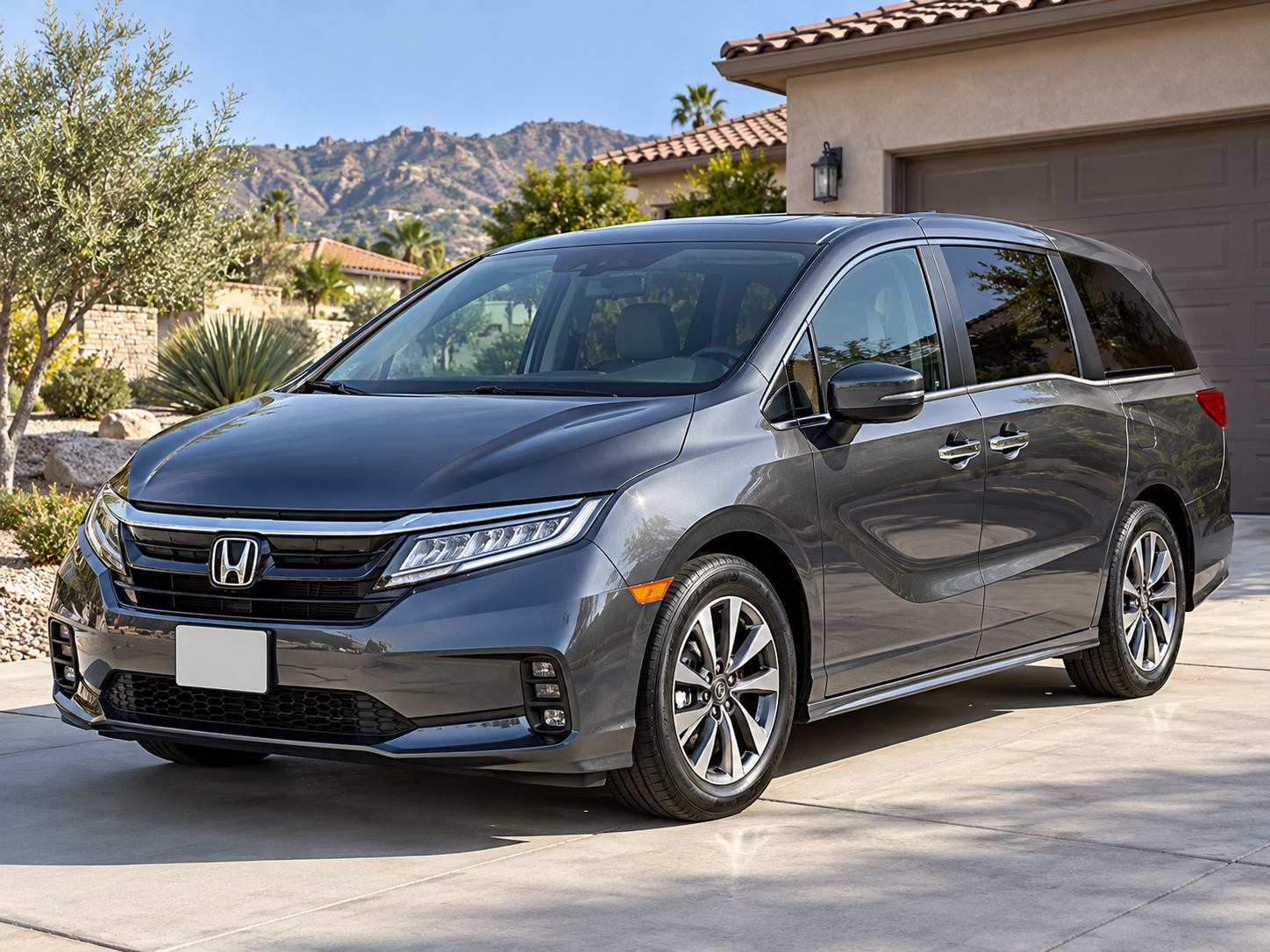
Visual proof
Before and after
Silver and grey metallics hide a lot, but not this. Mineral rings show up against light paint the moment the sun hits them at an angle.
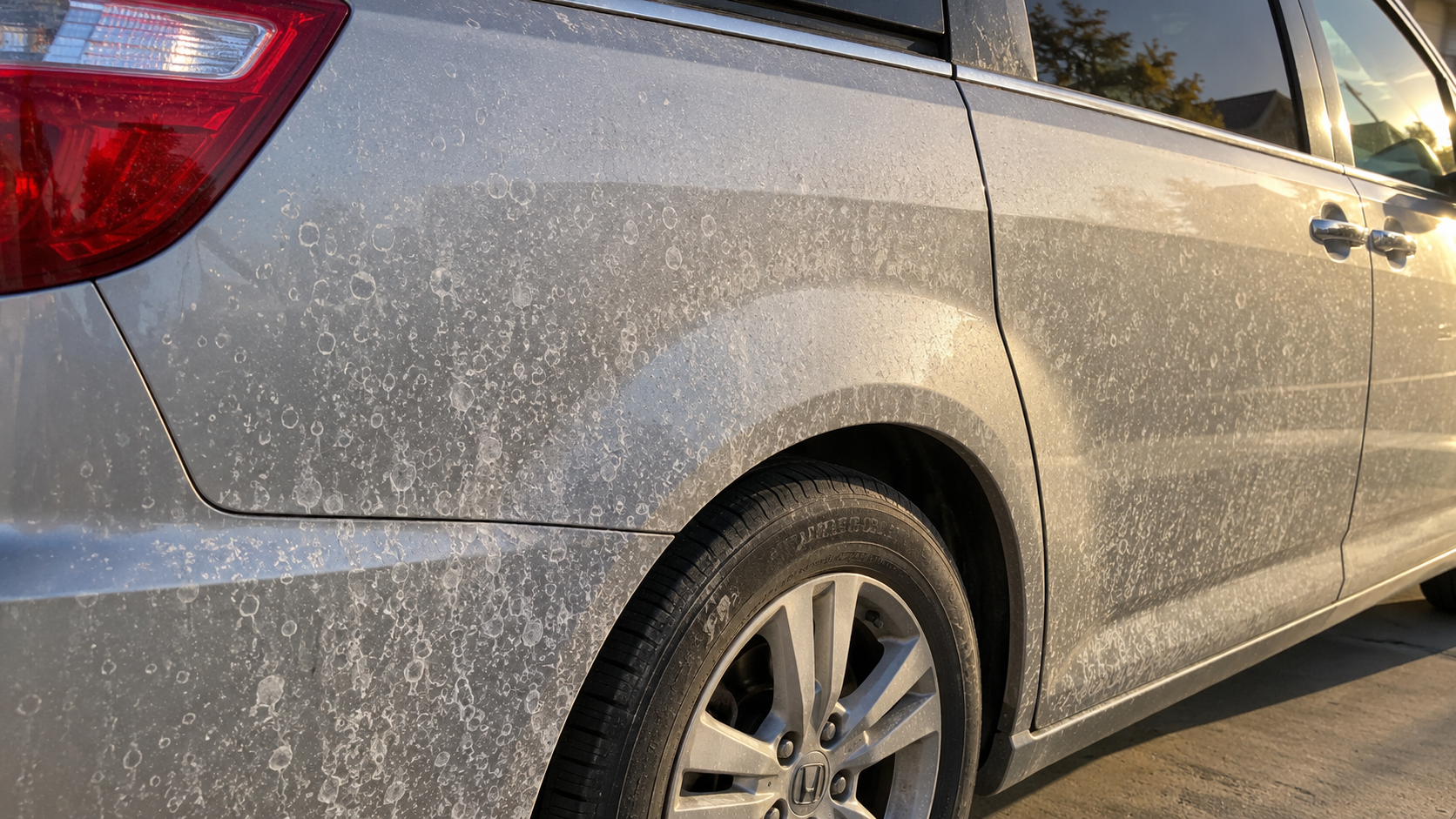
Before — mineral rings from sprinkler overspray
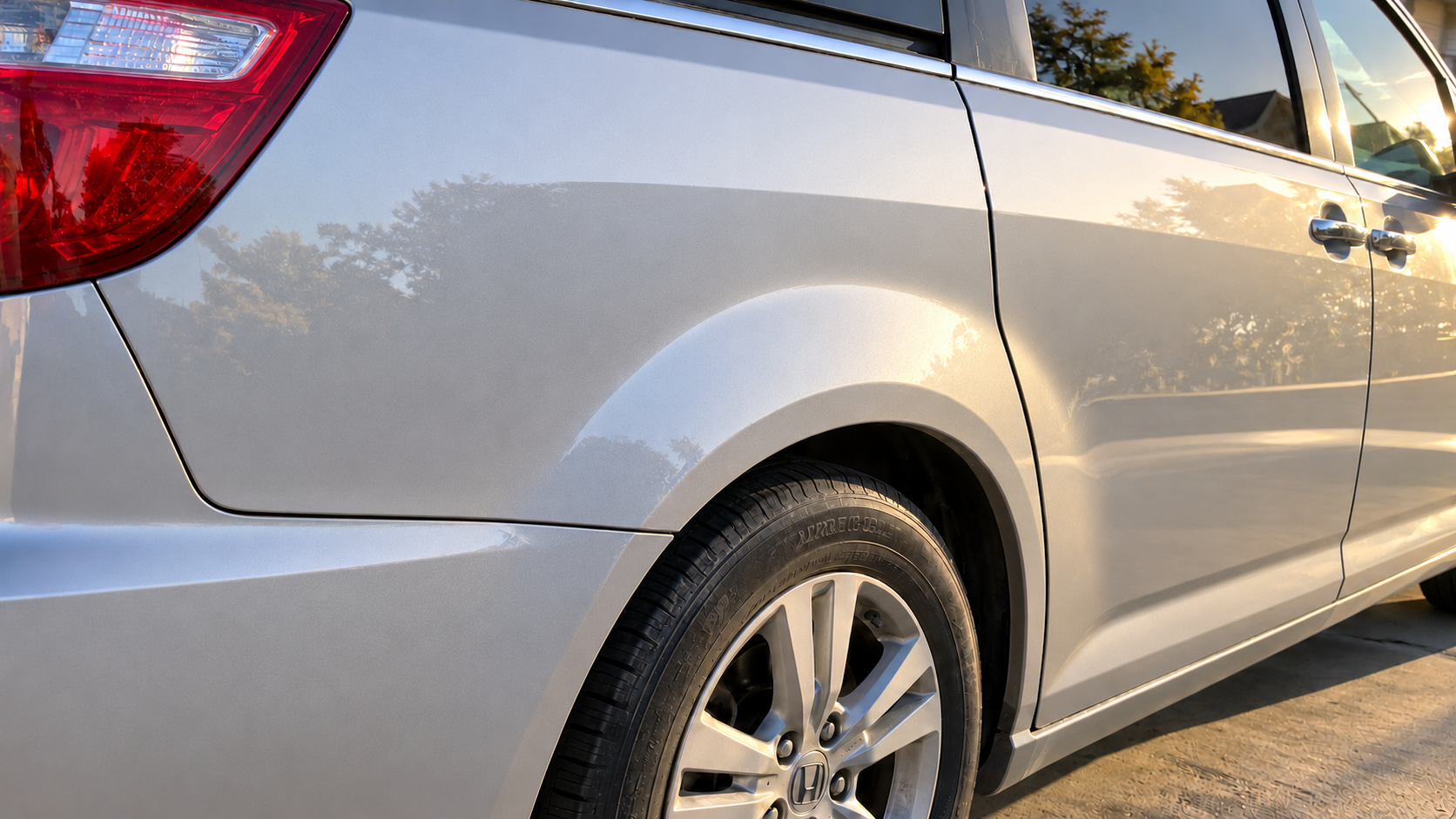
After — body water spot removal
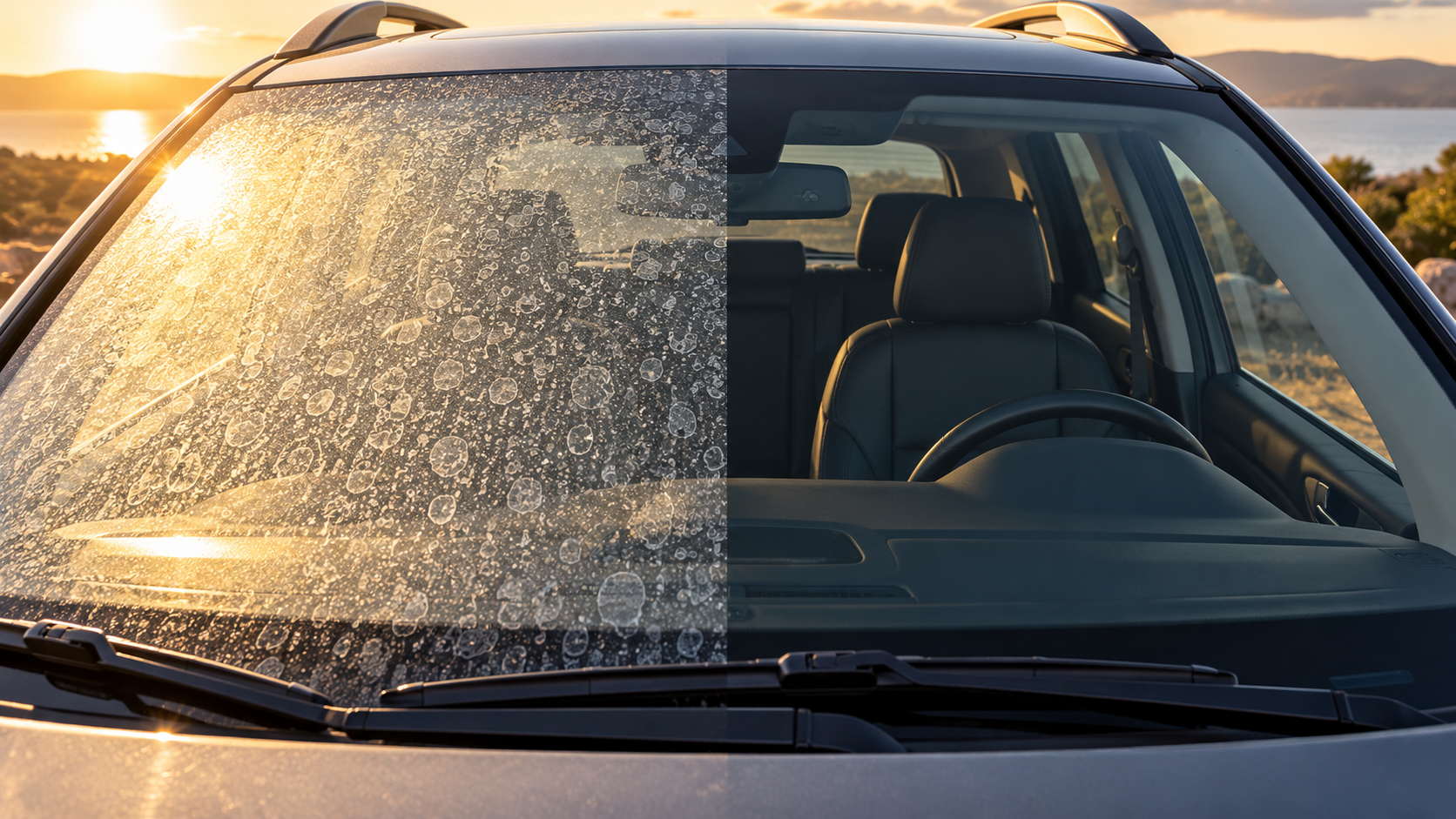
Glass — a safety problem, not just a cosmetic one
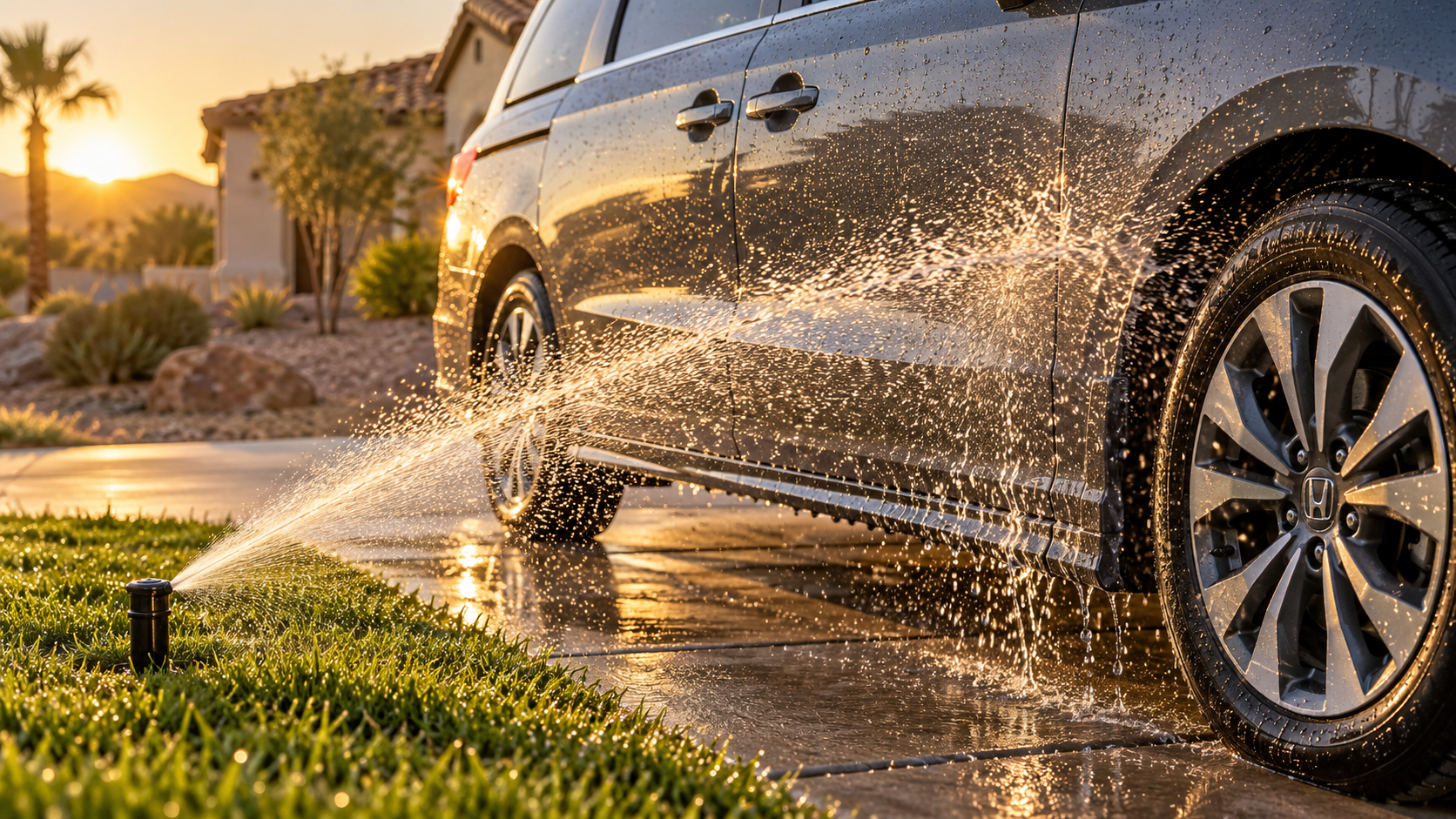
A head that drifted a few degrees, every night
Three times the national average
Why it is worse here
Water hardness is measured in grains per gallon. The national average is around 5. San Diego County runs 16 to 18, which puts it well past the threshold water utilities themselves call “very hard”.
More mineral per drop
Roughly three times as much calcium and magnesium in every drop that lands on your paint and then evaporates off it.
260+ days of sun
Heat is what turns a deposit sitting on the clear coat into one etched into it. Water that dries fast in direct sun does the most damage.
Irrigation everywhere
Dry landscaping means sprinklers running most nights of the year, often onto the same parked car in the same spot.
- Surface deposits come off chemically — the mineral is dissolved and lifted
- Etched deposits need machine correction, because the damage is in the clear coat rather than on it
- Glass is a separate process — mineral bonds harder to glass and it cannot be polished like paint
- Horizontal panels first — roof, hood and trunk lid take the worst of it
- Included free in every Borograph and Liquid PPF package, on all exterior surfaces
- Mobile — done in an enclosed bay at your home or office
Starting prices — mobile included
What removal costs
Prices shown are card prices. Pay by cash or check and the lower price applies — shown in green beside every price on this page. No fee is ever added at checkout; the price you see is the price you pay.
Light surface spotting sits at the lower end. Deposits that have etched into the clear coat need machine work and are quoted after inspection.
Water spot removal
Service
Small
Medium
Large
Water spot removal — body
$104$100 cash
$130$125 cash
$156$150 cash
Water spot removal — glass
$78$75 cash
$104$100 cash
$104$100 cash
Sizes. Small = sedan or coupe · Medium = crossover, pickup or small SUV · Large = full-size truck, van or large SUV.
Severe etching
Etched into the clear coatNeeds machine correction rather than chemical removal
By inspection
Multi-stage paint correctionWhen spotting comes with swirls and oxidation
By inspection
Clear coat applicationWhen the mineral has etched through the clear entirely
By inspection
Send photos taken in angled sunlight — that is the light that shows mineral rings. Straight-on shade photos make badly spotted paint look fine.
Stop it happening again
Stealth Diamond Borograph CeramicMineral cannot bond — the next lot washes off. Water spot removal included
from $1,035$1,000 cash
Ceramic Infused Super ProtectionShorter-term protection — lasts 12 to 18 months
from $78$75 cash
Maintenance programMonthly deluxe detail for coated vehicles, 25% off
from $195 / mo$188 / mo cash
Removing the spots does nothing to stop the next sprinkler cycle putting them back. Coating the paint is what breaks the cycle.
13 years in business
5,000+ vehicles
Fully insured
Trained & certified techs
All cards, cash, check, Venmo & PayPal
100% satisfaction guaranteed
In our customers’ words
Five stars, every one
Google Reviews
Shown word for word
These reviews are from Zippy Klean’s Hawaii customers — same owner, same crew standard, now in San Diego.
I had 3 pickup trucks and 3 SUV’s done by Kelson. He did a great job and all the vehicles look like new. Thank you
Zippy Klean is amazing! Truly the best service ever—so much attention to detail, not a single spot missed! The booking process was super easy, and their response time was lightning fast. I’m already looking forward to my next service. Highly recommend both the inside and outside detail packages!
No obligation
Get your quote
Send photos taken in angled sunlight — that is the light that shows mineral rings. We will tell you whether it is surface spotting or etched in, and which marks will not come out.
Prefer to talk? (858) 808-1244 — call or text, Mon–Sat.
Straight answers
Water spot questions
What causes hard water spots on a car?
Hard water spots are mineral deposits left behind when water dries on the surface instead of being dried off — San Diego tap water runs 16 to 18 grains per gallon against a national average near 5, so there is roughly three times as much mineral in every drop.
The two usual sources are sprinkler overspray and a rinse that dried in the sun before anyone got to it with a towel. Both leave a ring of calcium and magnesium sitting on the clear coat.
Left alone in 260+ days of sun, those deposits stop sitting on the paint and start etching into it. That is the difference between a spot that wipes off and one that needs machine work.
Can hard water spots be removed permanently?
Yes. Surface deposits are dissolved and removed chemically, and spots that have etched into the clear coat are removed by machine polishing — both are permanent, because the deposit or the damaged clear is physically gone.
What is not permanent is the result, unless something changes. Removing the spots does nothing to stop the next sprinkler cycle putting them back. That is a separate problem with a separate answer.
A permanent ceramic coating is what breaks the cycle. It does not stop mineral landing on the car, but it stops it bonding to the paint, so the next lot comes off in a normal wash instead of needing this service again.
How much does water spot removal cost in San Diego?
Water spot removal starts at $104 for the body and $78 for glass on a sedan or coupe, rising to $156 for the body and $104 for glass on a full-size truck, van or large SUV. Severe etching is quoted after inspection.
Light surface spotting is at the lower end and is often handled chemically. Deposits that have etched into the clear coat need machine correction and are priced accordingly, which is why severe cases are quoted rather than listed.
Water spot removal on all exterior surfaces is included at no extra charge in every Stealth Diamond Borograph and Liquid PPF package.
Can hard water spots be removed from glass?
Yes, but glass is a different job from paint — mineral bonds harder to glass than to clear coat, and glass cannot be polished the same way, so it takes a dedicated process and usually longer per square foot.
Windshields are the common case in San Diego, and badly spotted glass is a safety issue as much as a cosmetic one: mineral scatters oncoming headlights at night and turns low sun into glare you cannot see through.
Once glass is clear we can coat it with NanoPro® Ceramic Glass — Ultra Visibility, which is included in the Diamond Complete package and applied to the windshield, door glass and mirrors.
When are water spots too deep to remove?
Water spots are beyond removal when the mineral has etched through the clear coat into the base coat — at that point polishing has nothing left to level, and the panel needs paint or clear coat application rather than correction.
This is rare but it happens, usually on a vehicle that has sat under a sprinkler for a season or more without being washed. Horizontal panels go first: roof, hood, trunk lid.
We will tell you at the inspection which spots will come out and which will not, before you book. Promising to remove every mark is how customers end up disappointed on collection.
How do I stop water spots coming back?
Dry the car rather than letting it air dry, keep it out of sprinkler range, and coat the paint and glass so mineral cannot bond to them — those three together are what actually breaks the cycle in a 16 to 18 grain county.
The sprinkler one is worth checking properly. A head that has drifted a few degrees over a season will hit a car parked in the same spot every single night, and most people never notice until the paint shows it.
Customers on our maintenance program get a monthly deluxe detail at 25% off, done by the people who coated the vehicle, which is the most reliable way to keep on top of it.
Mobile — we come to you
Book your spot
(858) 808-1244San Diego County to Temecula. Mon–Sat by appointment.